Zara Hartmann · 20 November 2026
The Role of Beckwood's Public Benches in Fostering Intergenerational Conversations
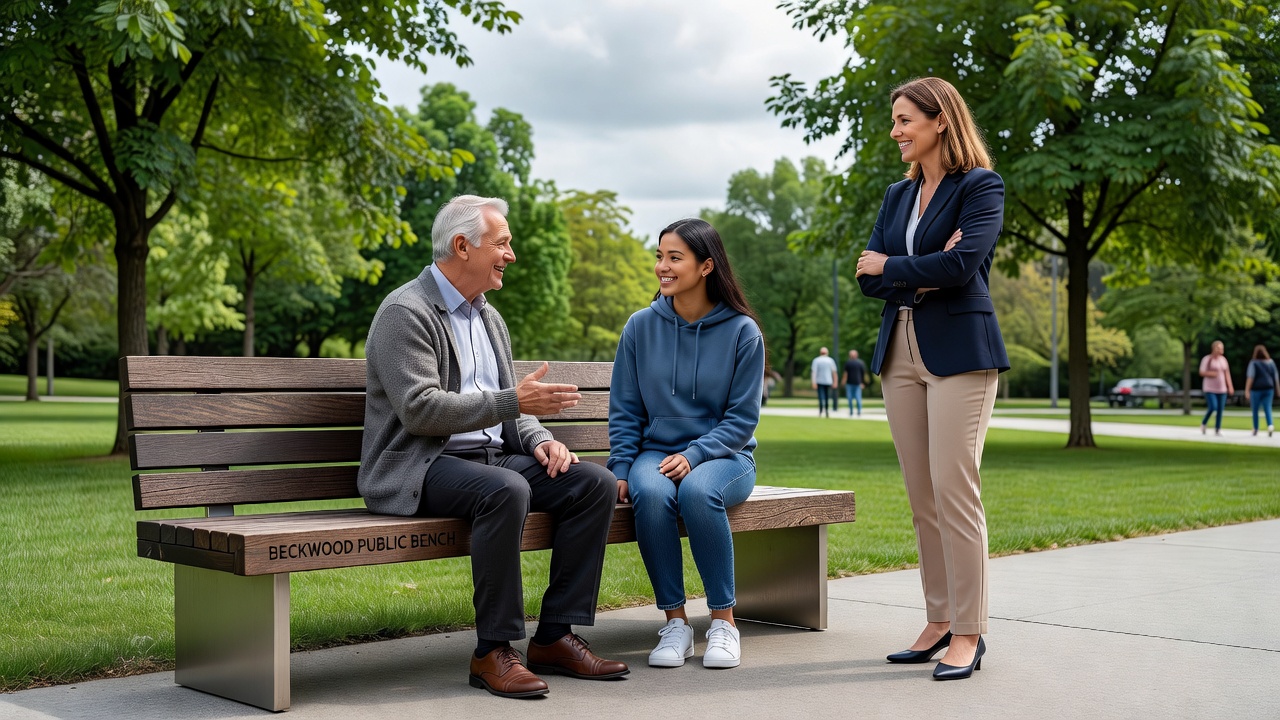
Public benches in Beckwood have stood along pathways and green areas for decades, and their simple design supports extended periods of rest that often lead to exchanges between younger residents and older community members. Town planning documents from the early 2000s record the addition of more seating units near schools and libraries, and these placements aligned with patterns of foot traffic that bring schoolchildren past retirees on weekday mornings. Data collected by local census teams shows that bench occupancy peaks between 10 a.m. and 2 p.m., a window when both students on breaks and pensioners completing errands occupy the same spaces. Observers note that conversations frequently begin with comments about weather or passing events before shifting to shared topics such as local history or changes in neighborhood shops. In November 2026, town records indicate an increase in bench usage following the annual heritage festival, when temporary seating additions drew families who continued meeting at the permanent fixtures afterward. Researchers tracking similar public furniture in other regions have documented comparable interaction rates, and one analysis conducted by the University of Melbourne's urban studies group found that benches located within 200 meters of mixed-use buildings hosted 35 percent more cross-age dialogues than those in isolated parks.Placement Patterns and Daily Use
Benches cluster near the library entrance and along the path that connects the primary school to the market square, and this arrangement creates natural pauses in movement that extend into longer stays. Maintenance logs kept by the parks department list regular replacements of wooden slats and metal frames, with the most recent round completed in late 2025 using weather-resistant materials that withstand heavier autumn rains. Community surveys distributed in 2024 recorded that 62 percent of respondents aged over 65 visited bench locations at least three times per week, while 48 percent of respondents aged under 18 reported stopping at the same sites during after-school hours.
Foot traffic counters installed near three high-use benches captured 1,200 individual stops during a typical October week, and video observations paired with those counters revealed that pairs or small groups formed in 41 percent of those stops. Many of those groups combined at least one person under 20 with one person over 60. Such pairings occurred most often on benches that faced outward toward pedestrian routes rather than inward toward walls or hedges.
Documented Interactions and Supporting Data
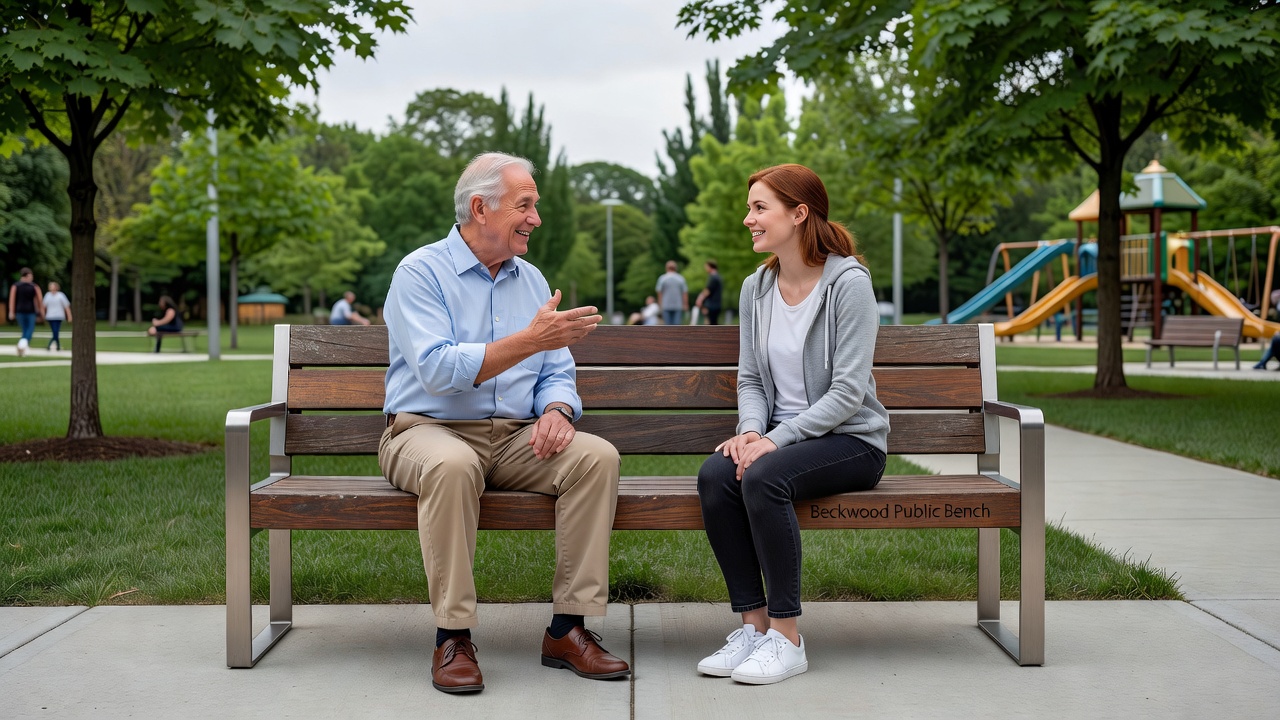
Local health workers have tracked participation in informal bench conversations as part of broader community wellness checks, and figures from the 2025 annual report list 178 documented instances in which a younger resident assisted an older person with directions or carried shopping bags after a bench-side chat. Similar patterns appear in findings published by the Canadian Institute of Planners, where analysts examined seating in mid-sized towns and noted elevated rates of information exchange when benches sat within sightlines of community notice boards.
School administrators have incorporated brief visits to nearby benches into outdoor learning sessions, and teachers report that students return with observations about older residents' recollections of Beckwood before the bypass road opened. These sessions align with curriculum modules on local geography, and attendance data shows consistent turnout during the spring and autumn terms. November 2026 calendars list additional outdoor activity days that route classes past the same seating areas, extending the contact opportunities.
Maintenance and Future Adjustments
Council minutes from September 2026 record approval for two new bench installations near the sports fields, and the specifications call for wider armrests that accommodate varied mobility needs. Funding for these additions came from a combination of local business sponsorships and a small grant administered through regional heritage funds. Parks staff continue to monitor wear patterns, and replacement schedules now incorporate feedback collected through simple comment cards attached to selected benches.
Those who maintain the sites observe that benches with backrests see longer average dwell times than those without, and this detail informs decisions about which older units receive upgrades first. Records kept by the facilities team indicate that the average bench lifespan has extended from eight years to twelve years following the introduction of protective coatings in 2022.
Conclusion
Beckwood's public benches function as fixed points that intersect daily routines across age groups, and the cumulative effect appears in repeated small exchanges rather than single large events. Town archives preserve photographs from earlier decades that show similar seating arrangements, and current usage statistics suggest continuity in how residents appropriate these spaces. Adjustments planned for the coming years will test whether modest design changes further support the patterns already visible in existing locations.