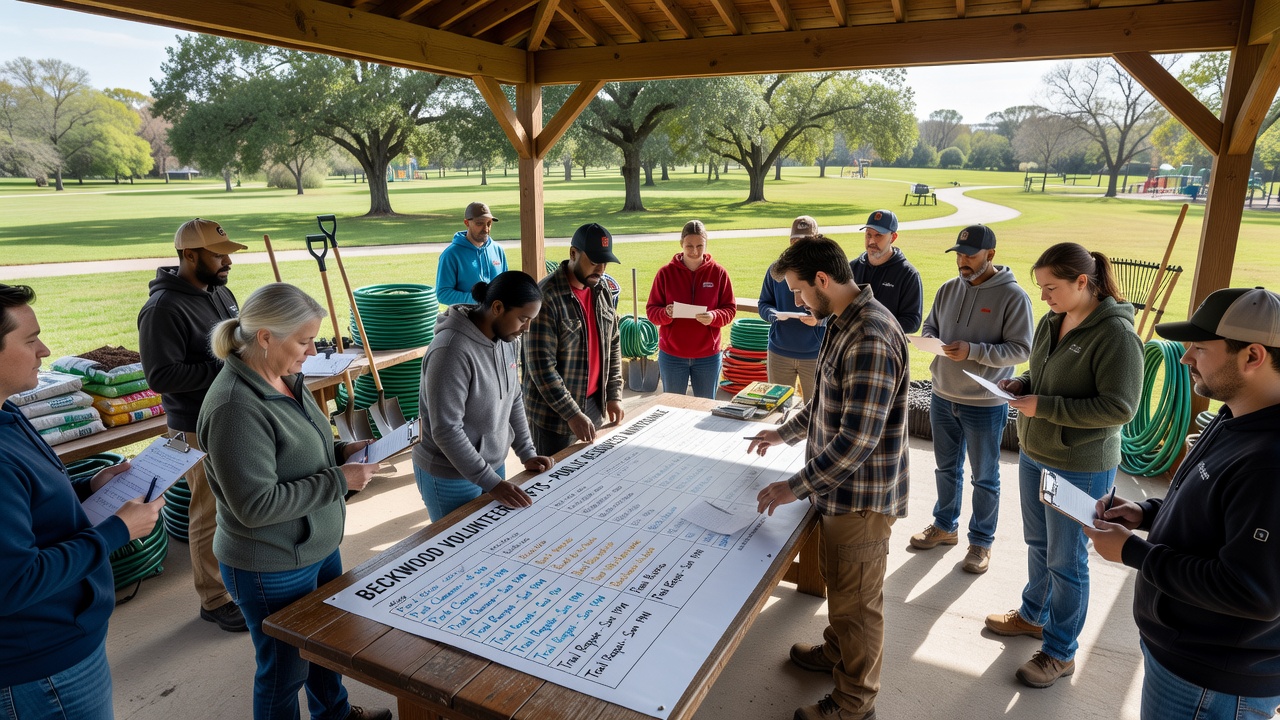
Tina Fischer · 6 November 2026
Beckwood Locals Coordinate Volunteer Shifts to Maintain Shared Public Resources
Beckwood locals have developed structured volunteer shift systems to care for shared public resources including parks, community gardens, and recreational facilities where residents sign up through digital platforms and in-person boards to handle tasks such as litter removal, path repairs, and seasonal planting while ensuring consistent coverage throughout the year.
Coordination begins at monthly planning sessions held at the town hall where participants review resource needs and assign shifts based on availability and skill sets with some focusing on maintenance while others manage logistics like tool distribution and safety briefings.
Shift Coordination Methods in Practice
Residents use a shared online calendar combined with paper sign-up sheets at local libraries to track commitments and avoid overlaps while groups meet weekly to discuss progress and adjust for weather or unexpected issues like equipment failures. Those handling green spaces often work in teams of four during early morning slots to water plants and prune hedges whereas afternoon shifts tackle pathways and seating areas to keep areas accessible for public use.
Data from community records shows that over 150 volunteers participated in the past year contributing more than 2,400 hours across various sites with peak activity during spring and autumn when planting and cleanup demands rise.
Resources Covered by Volunteer Efforts
Shared spaces include the central park with its playground equipment, several pocket gardens near residential zones, and the riverside walkway that requires regular clearing to prevent erosion and maintain safe access for walkers and cyclists. Volunteer teams also support the upkeep of notice boards and small libraries at bus stops where they replace damaged materials and ensure cleanliness.
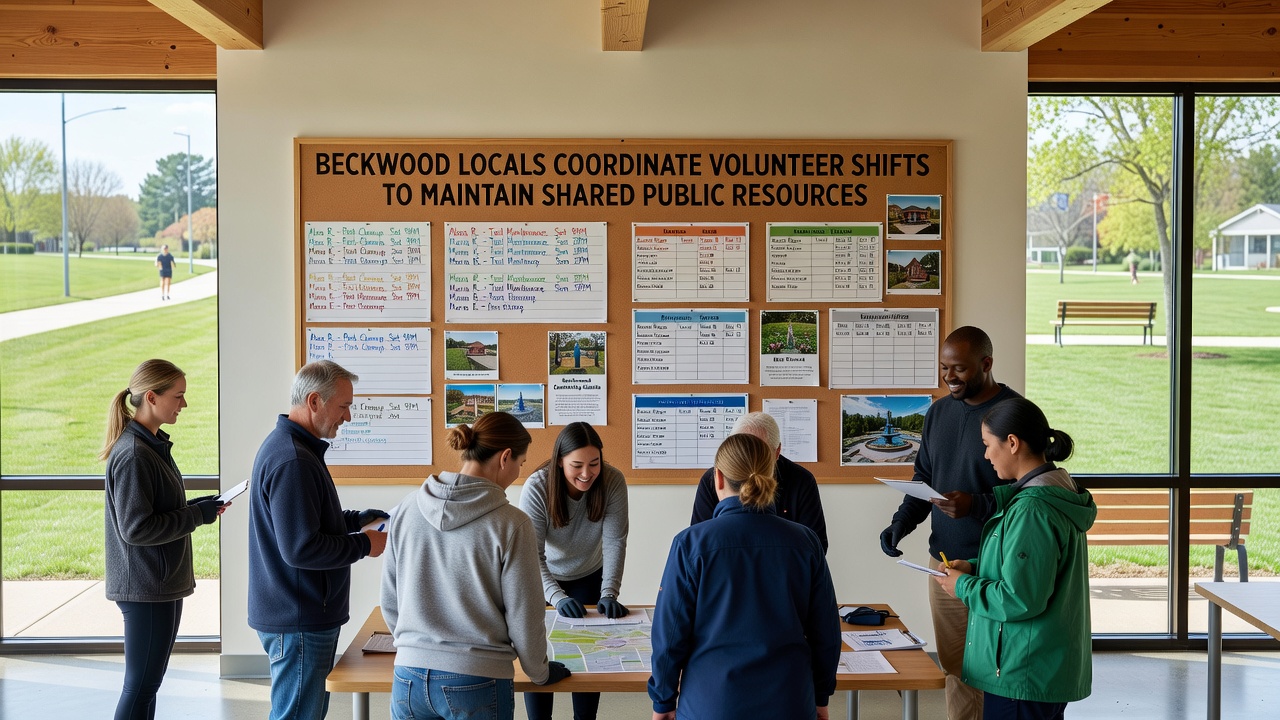
One established routine involves pairing experienced volunteers with newcomers for training on equipment use and safety protocols which helps sustain participation rates as new residents join the rotation. Schedules for November 2026 already include dedicated slots for leaf collection and preparation of winter protection measures around tree bases to support long-term resource health.
Integration with Local Data and External Insights
Research from Volunteer Canada indicates that coordinated shift models in similar communities lead to higher retention when tasks align with participant interests and when clear communication channels exist between organizers and volunteers. Figures from Australian volunteer networks reveal comparable patterns where structured rotations reduce burnout and improve coverage consistency across public assets.
Beckwood's approach incorporates feedback loops where shift leaders submit brief reports after each session noting completed work and any emerging requirements which feeds into the next planning cycle. This method allows adjustments without disrupting ongoing efforts and supports steady progress on larger projects like trail expansions or garden redesigns.
Patterns Observed Across Seasons
During summer months emphasis shifts toward irrigation and shade provision while winter focuses on debris removal and structural checks to prevent damage from frost or heavy rain. Observers note that the system adapts well because volunteers can swap shifts through the central app when personal schedules change which keeps overall participation stable.
Community logs document steady increases in covered areas with initial efforts centered on the main park now extending to outlying paths and smaller green zones as more residents sign on. Training sessions held quarterly cover topics such as native plant care and basic tool maintenance to broaden the skill base available for shifts.
Conclusion
Beckwood's volunteer shift coordination demonstrates a practical framework for maintaining public resources through distributed responsibilities and regular communication which sustains both the assets and teh network of participants involved. Continued refinements based on seasonal data and resident input support ongoing functionality across these shared spaces.